
who we are
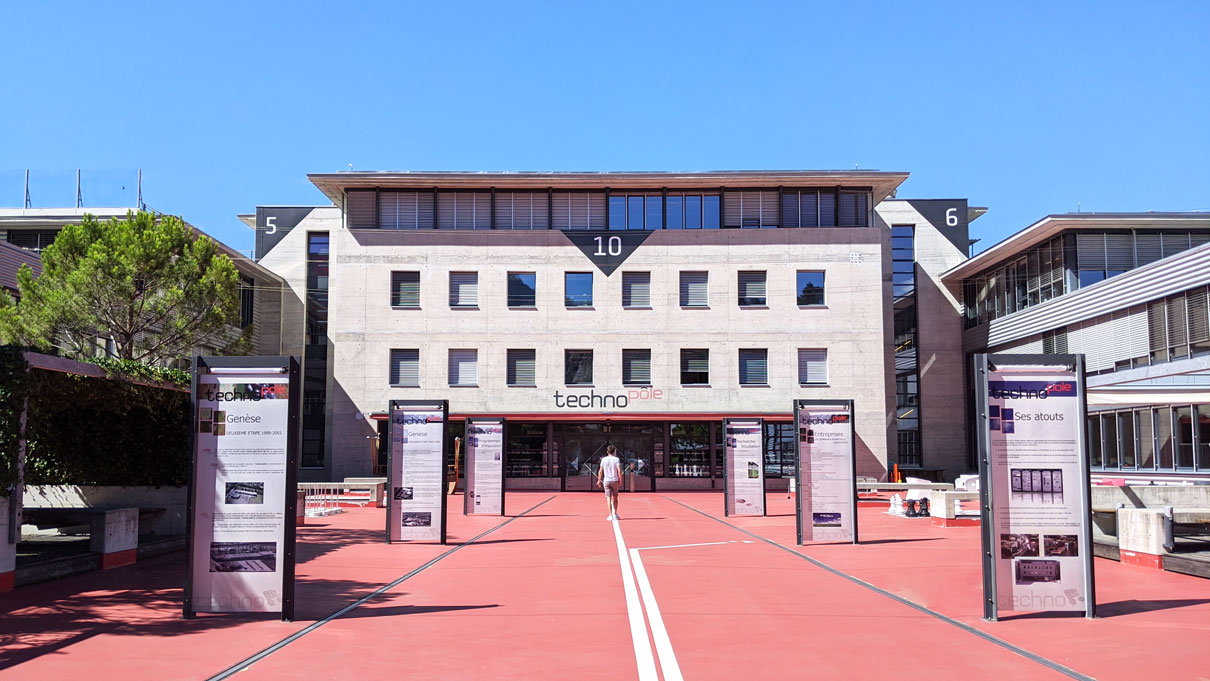
AKTS SA (Advanced Kinetics and Technology Solutions) is based in Sierre, Valais (Switzerland). It is dedicated to bringing together the worlds of solid state kinetic analysis, thermogravimetry (TG), differential thermal analysis (DTA), differential scanning calorimetry (DSC), thermomechanical analysis (TMA), evolved gas analysis (EGA, MS, FTIR) and thermal stability of materials. AKTS technology provides users with the required precision in an age where the use of high-performance materials is expanding, with a continuing infusion of new materials and applications. This situation is further enhanced by recycling efforts, and the growing use of thermal analysis for material quality control. AKTS provides access to information on thermal stability of materials for a multiplicity of users. We believe that this combining of solid state kinetic analysis and thermal stability of materials has a great future.
Our mission
Our mission is to increase the scope and productivity of science and engineering, accelerate the pace of discovery and development, facilitate learning, and amplify the creativity of research. We use an ultimate technical computing environment for visualization and simulation of material transformations, and the mathematics embodied within it, to provide reliable predictions of material transformations as a function of time and/or temperature.
Worldwide Services
AKTS designs its Software not only to provide valuable predictions of material decomposition but also to facilitate the processing and transfer of these data into customers’ management information systems. AKTS serves customers worldwide through its own service organization. Our online service provides the most comprehensive, innovative and reliable solutions. It gives a short response time because of our efficient service network. Our service performs the kinetic analysis and informs the user about the thermal stability of their materials. Each analysis we provide is delivered with the proven techniques and advances.
Expert solutions
AKTS technology is available worldwide. AKTS technology possesses an unparalleled capability of solid state kinetic analysis gained through the successful completion of many application developments over the last 30 years. With AKTS software, we provide the ultimate technical computing environment for customers’ visualization and prediction of material transformations. The AKTS’ strength lies in its proprietary technology, which provides users with an exceptionally high standard of numeric computation and precision. AKTS service plays a very important role in the identification of materials’ transformation and is very valuable in guiding screening and development decisions of candidate materials.
Analysis Field
for precise quantification and prediction of reductive and oxidative testing,
reaction progress, thermal stability of:

Pharma

Chemicals

Automobile

Food and Beverage

Consumer goods

Hi-tech
Software compliance
AKTS-Thermokinetics (TK), AKTS-Thermokinetics Sparse Data (TKsd), AKTS-Thermal Safety (TS) and AKTS Thermoanalytical Data Management (TAdm) software follow the security, data integrity, and audit trail requirements specified by FDA 21 CFR Part 11.
The security is managed with users and groups with each user being recognized using a username and password. Each group can have different access privileges. Clearly defining each user’s access privileges prevents unauthorized changes to settings and data access.
The Audit Trail records all operations performed, including logins and logouts to the system, changes in users and groups, together with the username and the time. The recorded operational log is registered in the database for traceability.
Our Partners





News and Events
Upcoming Meetings and Symposiums of 2024
- 50th NATAS Conference
September 16-19, 2024, Knoxville, TN, USA
https://www.natasinfo.org/ - 53rd ICT Conference
June 25-28, 2024, Karlsruhe, DE
https://www.ict.fraunhofer.de/en/conferences/conferences/annual-conference.html - STK 2024
To be defined
(no link yet)
Past Meetings and Symposiums of 2023
- 52th ICT Conference
June 27-30, 2023, Karlsruhe, DE
https://www.ict.fraunhofer.de/en/conferences/conferences/annual-conference.html - 49th NATAS Conference
Jul. 31-August 4, 2023, Rockville, MD, USA
https://www.natasinfo.org/ - 46th IPS Seminar, EuroPyro
September 11-14, 2023, Saint-Malo, France
https://europyro2023.org/ - 12th HFCS-EM
Sep. 19-21, 2023, La Haye, TNO, NL - STK 2023
Oct. 19, 2023, STK, Vevey, CH
https://stk-online.ch/ - Process Safety Forum 2023
Oct. 18-19, 2023, Rahway, Merck & Co., NJ, USA
Past Meetings and Symposiums of 2022
- Anmeldung zum Branchentreff Klebstoffformulierung
May 11-12, 2022, Bremen, Germany
https://www.ifam.fraunhofer.de/de/Messen_Veranstaltungen/branchentreff-klebstoffformulierung/anmeldung.html - 51st ICT Conference
June 28th-July 1st, 2022, Karlsruhe, Germany
https://www.ict.fraunhofer.de/en/conferences/conferences/ann_conf2020.html - 48th NATAS Conference
August 1-5, 2022, Cleveland, OH, USA
https://www.natasinfo.org/site_page.cfm?pk_association_webpage_menu=2008&pk_association_webpage=20957 - STK 2022
September 14-15, 2022, Zürich, Switzerland
http://www.stk-online.ch/event.html - TAFDV – Thermal Analysis Short Course
November 7-8, 2022, Virtual Format
https://tafdv.org/
Past Meetings and Symposiums of 2021
- STK 2021
October 26th, 2021, Fribourg, Switzerland
http://www.stk-online.ch/event.html
Past Meetings and Symposiums of 2020
- 17th ICTAC
30 August-4 September, 2020, Krakow, Poland
https://ictac2020.jordan.pl/en - 51st ICT – Cancelled because of COVID-19
23-26 June, 2020, Karlsruhe, Germany
https://www.ict.fraunhofer.de/en/conferences/conferences/ann_conf2020.html - 47th NATAS – Cancelled because of COVID-19
3-6 August, 2020, Cleveland, OH, USA
https://www.natasinfo.org/site_page.cfm?pk_association_webpage_menu=2008&pk_association_webpage=16791 - 45th STK Meeting – Cancelled because of COVID-19
12-13 May, 2020, Zürich, Switzerland
http://www.stk-online.ch/Zurich2020/The%2045th%20STK%20Annual%20Meeting.pdf
Past Meetings and Symposiums of 2019
- 11th HFCS-EM 2019
13-16 May, 2019, Pfinztal, Germany
https://www.ict.fraunhofer.de/en/conferences/conferences/hfc-symposium2019.html - STK 2019
15 May, 2019, Thun, Switzerland
http://www.stk-online.ch/event.html - LossPrevention 2019
16-19 June, 2019, Delft, Netherlands
https://lossprevention2019.org/General+Information/_/pamfletLP2019%20LR_web.pdf - 50th ICT 2019
25-28 June, 2019, Karlsruhe, Germany
https://www.ict.fraunhofer.de/en/conferences/conferences/ann_conf.html - NATAS 2019
5-9 August, 2019, Newport, RI, USA
http://www.natasinfo.org/
Past Meetings and Symposiums of 2018
- SLP 2018
18-24 March, 2018, Boulder, CO, USA
https://www.nist.gov/news-events/events/2018/03/service-life-prediction-polymeric-materials-reaching-new-heights - STK 2018
15 May, 2018, Basel, Switzerland
http://www.stk-online.ch/event.html - ICT 2018
26-29 June, 2018, Karlsruhe, Germany
https://www.ict.fraunhofer.de/en/conferences/conferences/ann_conf.html - NATAS 2018
6-9 August, 2018, Philadelphia, PA, USA
http://www.natasinfo.org/